Myopia Control Lenses for Children
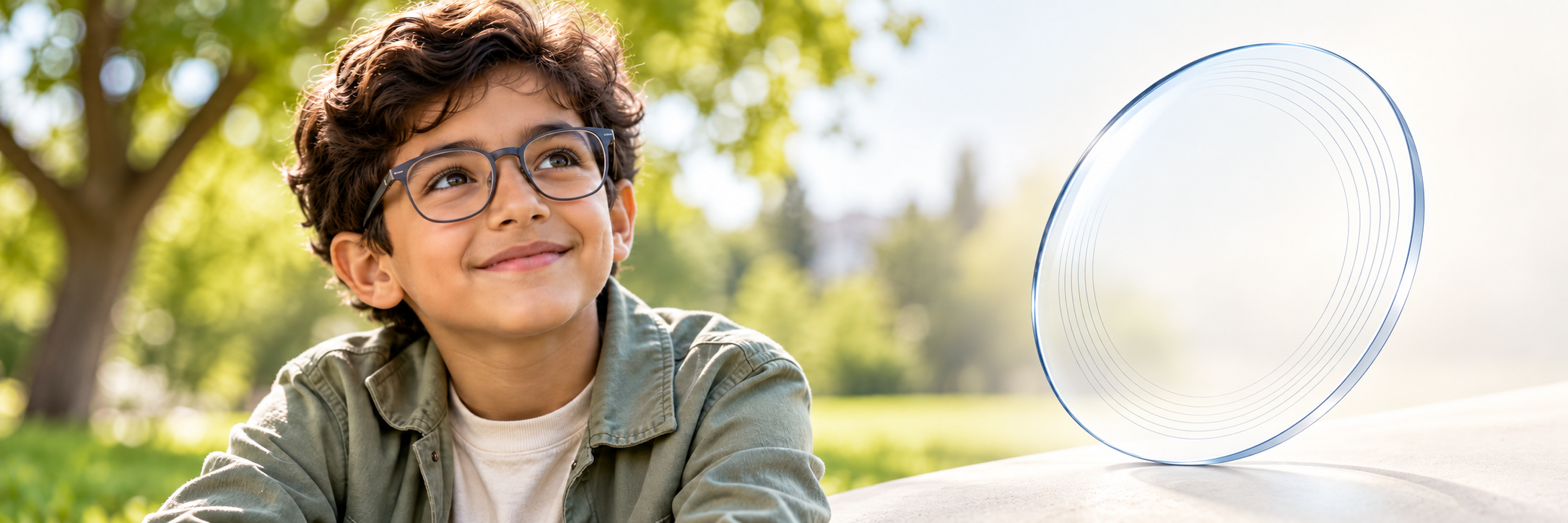
Is your child’s myopia getting stronger at each eye examination? Are you wondering whether the answer is simply a stronger pair of glasses—or whether myopia control lenses could help slow that progression?
Myopia control lenses are prescription spectacle lenses designed to correct vision and help slow the progression of short-sightedness in suitable children. These lenses are one part of myopia management, a broader care plan that includes assessment, vision correction, lifestyle advice and ongoing monitoring. Their purpose is to help children see clearly today while helping limit the increase in myopia during their growing years.
At Eye 2 Eye Optical in Sweifieh, Amman, we help parents understand options including ZEISS MyoCare, Essilor Stellest and Rodenstock MyCon, along with their benefits and limitations. The first step is an examination and a glasses prescription from an ophthalmologist. You can then visit us to discuss lens options, choose a suitable frame and have your child’s glasses measured, fitted and adjusted, while medical follow-up continues with the ophthalmologist.
What Is Myopia in Children?
Myopia, also known as short-sightedness or nearsightedness, makes distant objects appear blurred. A child may struggle to see the classroom board, squint when looking into the distance or move closer to the television.
Myopia occurs when light focuses in front of the retina rather than directly on it. It is often associated with the eye growing too long from front to back, and it may progress as a child grows.
Managing progression involves more than updating the numbers on a glasses prescription. Higher levels of myopia are associated with a greater risk of certain eye conditions later in life, including retinal detachment. Eye examinations and ongoing monitoring help identify the child’s needs and guide appropriate care. National Eye Institute
How Are Myopia Control Lenses Different from Regular Glasses?
Conventional single-vision glasses correct blurred vision. Myopia control lenses combine prescription correction with a specialised optical design intended to help slow myopia progression.
These lenses provide clear vision while using additional optical elements to influence how some light focuses within the eye, targeting signals associated with excessive eye growth.
Myopia control lenses do not cure myopia, reverse the prescription or guarantee that progression will stop. The aim is to slow progression, and individual results vary. Regular monitoring remains important even when a child sees clearly through their glasses. American Association for Pediatric Ophthalmology and Strabismus
An Ophthalmologist’s Examination Comes First
At Eye 2 Eye Optical, we require an eye examination and a glasses prescription from an ophthalmologist before dispensing myopia control glasses for children.
The ophthalmologist examines your child’s vision and eye health and assesses their medical needs. After the examination, bring the prescription to us so we can explain the available lens options, their benefits and limitations, wearing instructions and fitting requirements.
We coordinate with the ophthalmologist when clarification or further recommendations are needed. Monitoring your child’s eye health and myopia progression continues with the ophthalmologist at the intervals they recommend.
Are Myopia Control Lenses Suitable for My Child?
Choosing suitable lenses involves more than the prescription alone. The assessment considers:
Age and Onset
Your child’s age and when their myopia first developed.
Prescription History
Current and previous prescriptions, where available.
Changes Over Time
How your child’s prescription has changed between examinations.
Eye Examination Findings
Eye health and visual assessment results.
Family History
Whether myopia runs in the family.
Consistent Wear
Your child’s ability to follow the recommended wearing instructions.
A thorough assessment helps guide an appropriate management plan. No single lens is automatically the best choice for every child. International Myopia Institute clinical guidelines
Myopia Control Lenses: Options at Eye 2 Eye Optical
ZEISS MyoCare Lenses
ZEISS MyoCare lenses are designed to correct vision and help slow myopia progression in children.
Their C.A.R.E. technology combines a central clear zone with specialised annular optical elements designed to help slow excessive eye growth. ClearFocus design complements this approach by accounting for viewing through different areas of the lens.
We explain the lenses’ features, fitting requirements and wearing instructions, taking your child’s prescription and any clinical recommendations into account. Official ZEISS MyoCare information
Essilor Stellest Lenses
Essilor Stellest lenses are designed to correct vision and help slow myopia progression.
They use H.A.L.T. technology, incorporating highly aspherical lenslets around a central vision zone. The lenses provide prescription correction alongside the specialised optical effect intended to help control myopia progression.
We explain the wearing instructions and the importance of consistent use, while helping parents understand that clinical study results do not guarantee the same outcome for every child. Official Essilor Stellest information
Rodenstock MyCon Lenses
Rodenstock MyCon lenses are designed to correct vision and help slow myopia progression in children.
They use HAPD technology—Horizontal Asymmetrical Peripheral Defocus. This combines a central area for clear vision with specialised optical zones on the sides of the lens. These zones redirect peripheral light to focus in front of the retina, with the aim of slowing excessive eye growth.
We explain the lenses’ features, fitting requirements and wearing instructions in relation to your child’s prescription and any clinical recommendations. Official Rodenstock MyCon information
How We Fit Myopia Control Lenses for Your Child
Reviewing the Prescription and Explaining the Options
We review the ophthalmologist’s prescription and any accompanying recommendations, explain the available options and answer your questions about wearing and caring for the glasses.
If available, bring your child’s previous glasses and prescriptions. These records are also useful for the ophthalmologist when assessing changes in vision.
Choosing a Comfortable, Stable Frame
Frame selection is an important part of fitting myopia control glasses. We help you choose a frame that suits your child’s face, stays securely in place and meets the requirements of the selected lenses.
A well-adjusted frame helps maintain the lenses in their intended position during everyday activities.
Taking Digital Fitting Measurements with ZEISS i.Terminal
We use ZEISS i.Terminal to take digital spectacle-fitting measurements according to the requirements of the selected lens design.
These measurements support accurate lens positioning within the glasses. They are separate from medical examinations and axial length measurements used to monitor myopia progression.
Adjusting the Glasses and Explaining Their Use
At collection, we adjust the frame and check its fit and comfort. We explain how to wear, clean and care for the glasses, together with the instructions specific to the selected lenses.
Consistent Wear and Follow-Up Matter
Collecting the glasses is the beginning of their use. Following the recommended wearing instructions and attending follow-up appointments are essential parts of myopia management.
Wearing the glasses only for the classroom board or homework may not meet the recommended wearing schedule. Follow the instructions provided for your child and the selected lenses.
The ophthalmologist determines the examinations and follow-up intervals needed to assess prescription changes and treatment response. Monitoring may include axial length measurement when clinically appropriate and available.
Helpful everyday habits include spending regular time outdoors, taking breaks from prolonged near work and avoiding holding books or screens very close to the eyes. These habits support your child’s care plan and do not replace prescribed glasses or medical follow-up. AAPOS guidance for parents
Frequently Asked Questions About Myopia Control Lenses
Can My Child’s Prescription Still Increase While Wearing These Lenses?
Yes. The aim is to slow progression, and an increase in prescription alone does not show that the lenses have provided no benefit. The ophthalmologist assesses your child’s response through follow-up examinations and appropriate measurements.
Will My Child Need Time to Adapt?
Some children may need time to adjust. We explain the wearing instructions when you collect the glasses. If blurred vision or discomfort persists, we review the fit and coordinate with the ophthalmologist when needed.
Are These Spectacle Lenses or Contact Lenses?
ZEISS MyoCare, Essilor Stellest and Rodenstock MyCon, as described on this page, are spectacle lenses fitted into a glasses frame.
Does My Child Need an Ophthalmologist’s Examination Before Visiting You?
Yes. We require a glasses prescription from an ophthalmologist before dispensing myopia control glasses for children. After the examination, bring the prescription to us to discuss lens options and fitting.
Do These Glasses Replace Follow-Up Appointments?
No. Clear vision through the glasses is not enough on its own to assess myopia progression. Continue attending appointments as recommended by your child’s ophthalmologist.
Which Myopia Control Lens Is Best for My Child?
The choice should not be based on the brand name alone. Suitability depends on your child’s prescription, examination findings, individual needs and wearing requirements. We explain the differences between the options, taking the ophthalmologist’s recommendations into account and coordinating with them when needed.
Visit Us to Explore Myopia Control Lens Options
If you are considering myopia control glasses for your child, start with an ophthalmologist’s examination, then visit us with the prescription.
At Eye 2 Eye Optical, we explain your options, answer your questions and help with frame selection, digital fitting measurements and the preparation and adjustment of your child’s glasses. We also explain the importance of consistent wear and ongoing medical follow-up.
Find us: Sweifieh, Princess Taghreed Mohammad Street, opposite Al Baraka Mall, next to Swatch — Amman, Jordan.
Explore our prescription eyeglass lenses or contact Eye 2 Eye Optical for more information.